Solara
Solara is a chill, low-pressure mobile game where you tend a floating sky-island powered by a sleeping sun-spirit. By gathering light, growing solar-flora, and helping community travellers, you slowly heal a quiet world that has rebuilt itself in harmony with nature and gentle technology.
Animal Crossing meets Stardew Valley, set inside a Studio Ghibli sunrise.
Solara
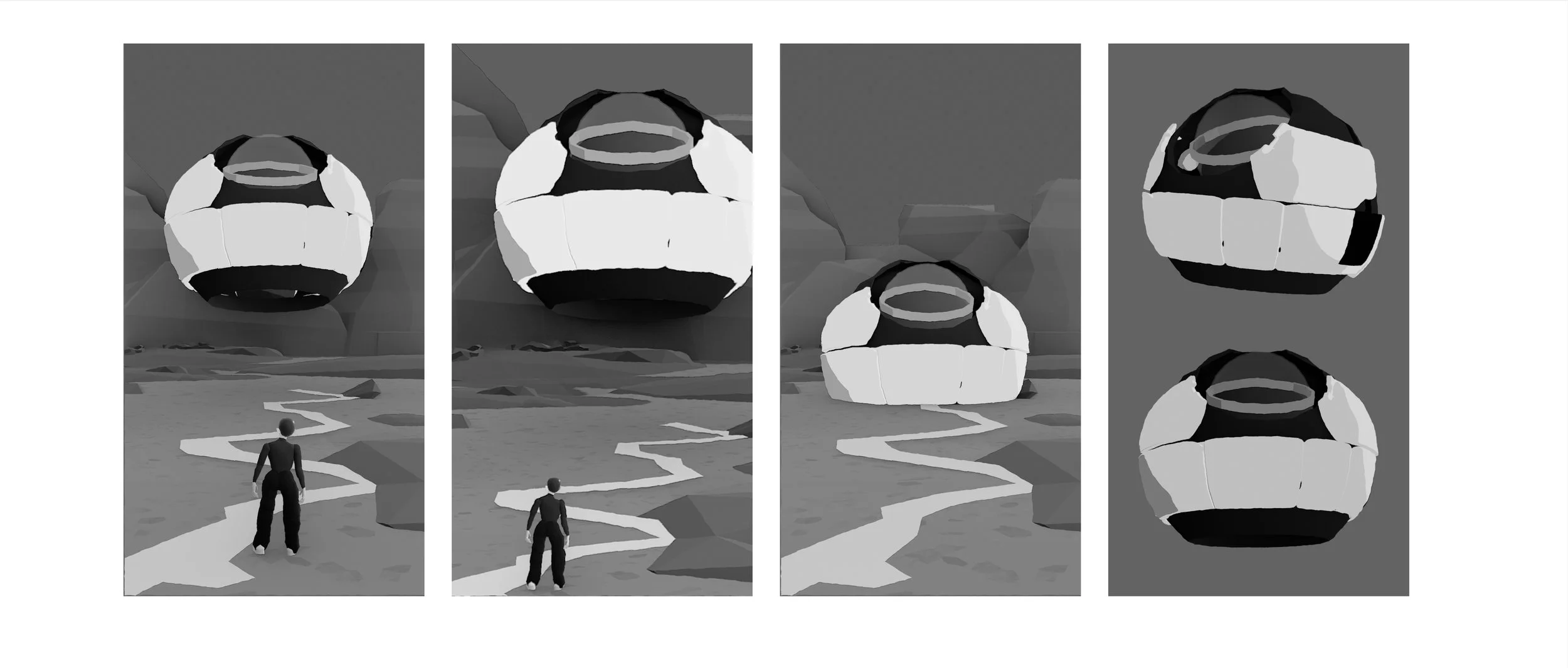
Solara begins with arrival.
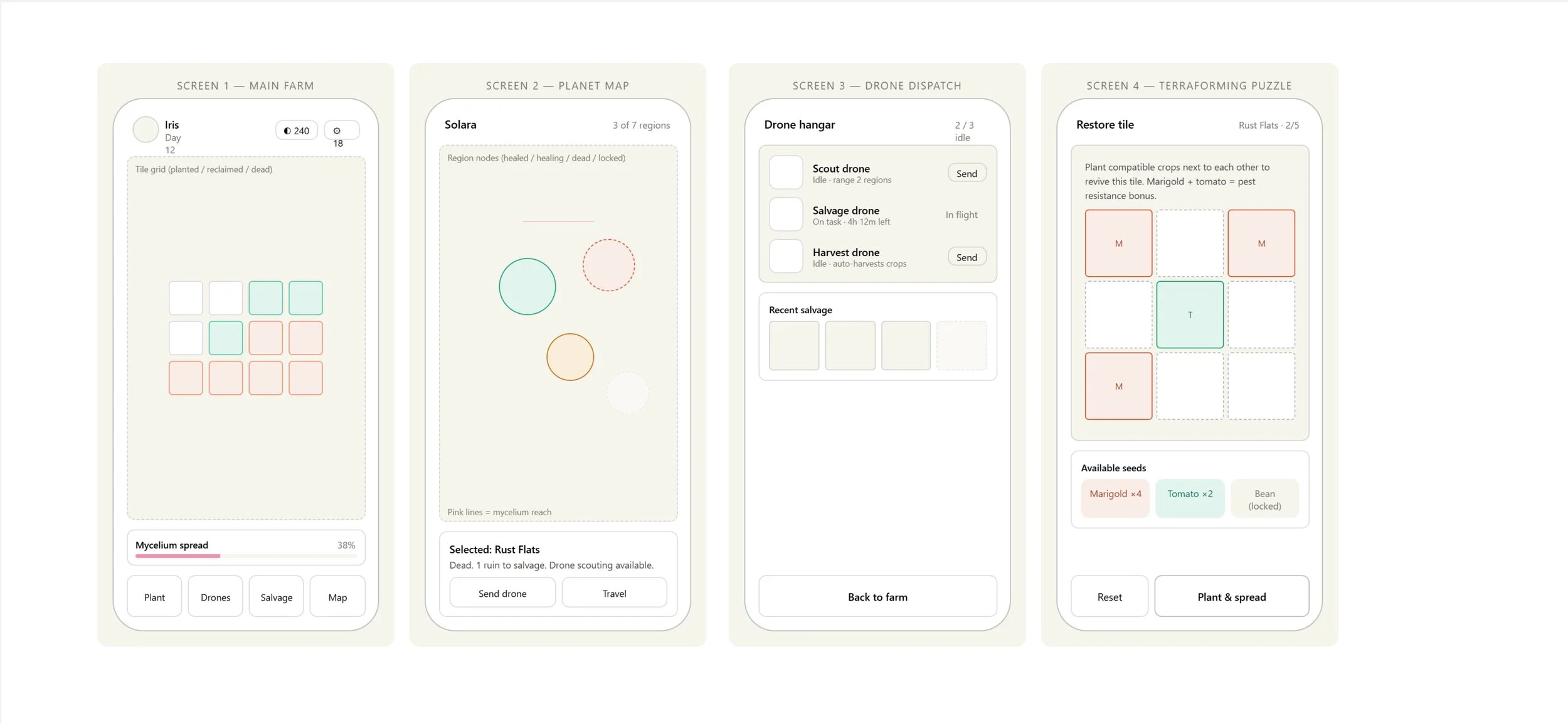
A cozy mobile farming game where you bring an abandoned planet back to life by terraforming, sending drones, and salvaging the ruins of the old civilization.
You're a small soul on a long, quiet pilgrimage.
The world is dead but not hostile — it's just waiting. You're the patient hand that brings it back, one tile at a time. Every time you show up, something more is growing — and slowly, a green town you've built with your own hands appears around you, full of warmth and quiet nostalgia for a life that was almost lost.
Your farm is contagious.
In Solara, you're not just farming on your own plot. A living mycelium network spreads from every crop you grow, healing the soil tile by tile, and the planet itself visibly transforms from rust to green as your reach expands. Drones keep working while you're away, salvaging the ruins of the old civilization for fragments of lore and craft materials. There are no enemies and no failure states — the world is dead but not hostile, just waiting. Solara takes the comfort of cozy farming and gives it a cause: you're not building a farm, you're reviving a planet.
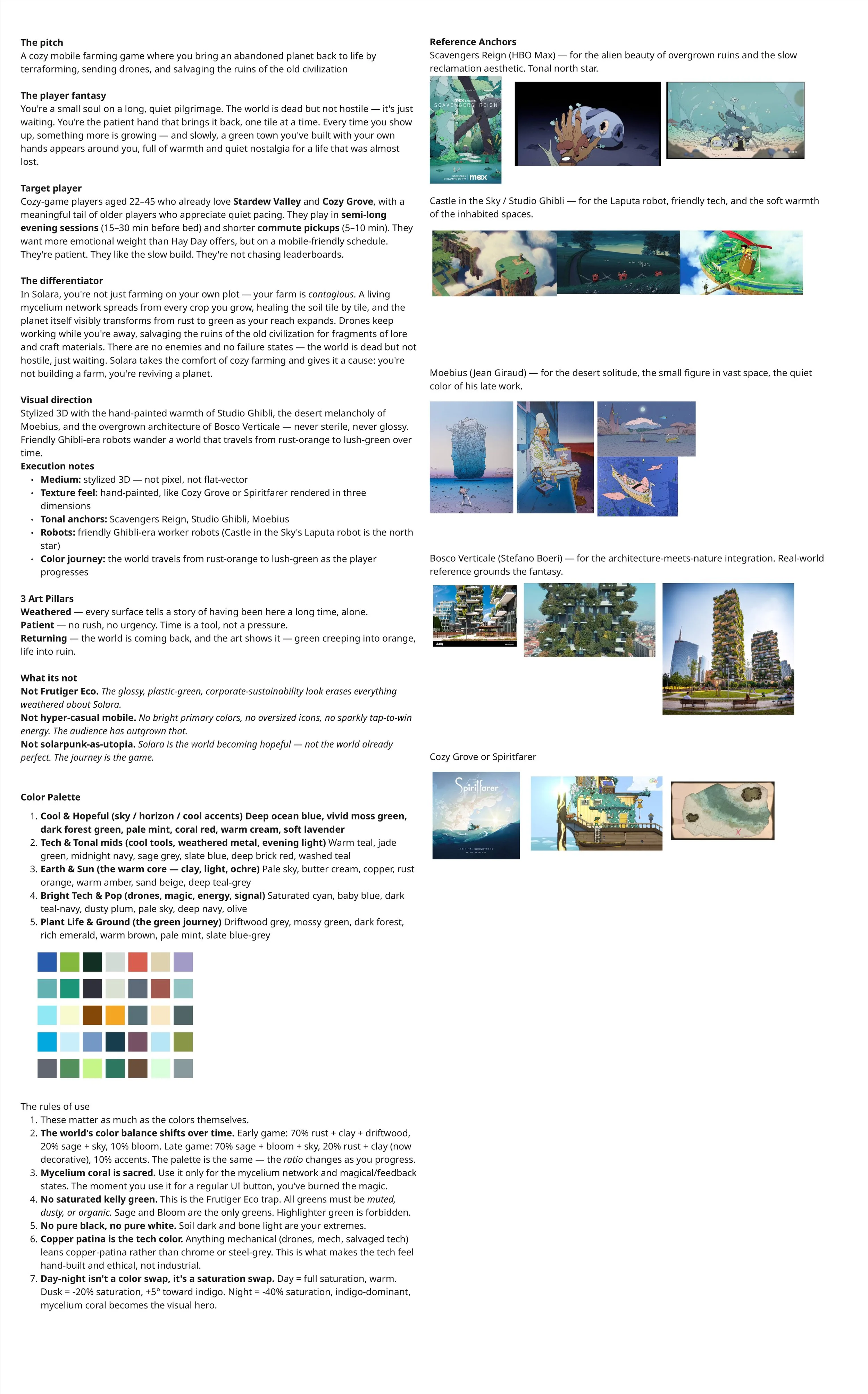
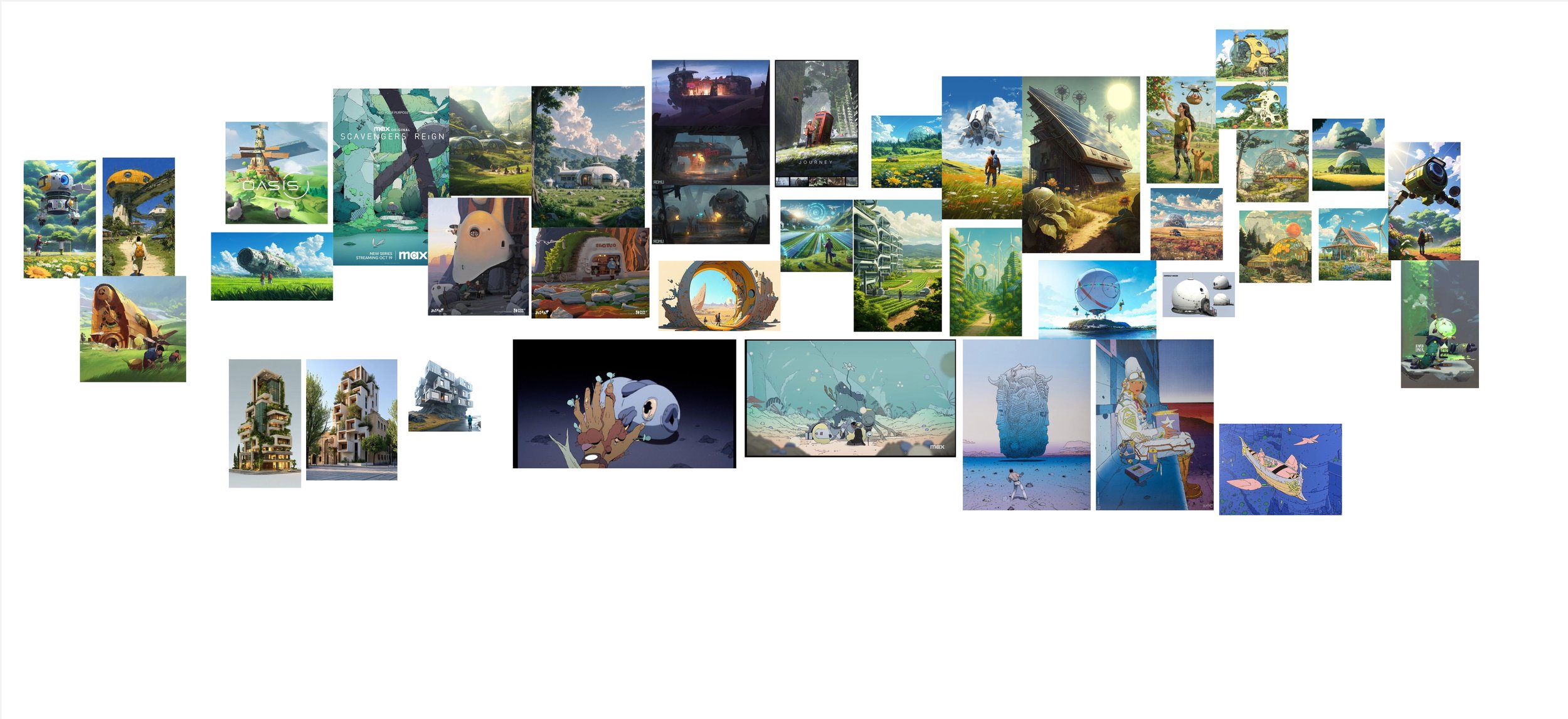
Stylized 3D with the hand-painted warmth of Studio Ghibli, the desert melancholy of Moebius, and the overgrown architecture of Bosco Verticale.
Never sterile, never glossy. Friendly Ghibli-era robots wander a world that travels from rust-orange to lush-green over time.
Weathered
Every surface tells a story of having been here a long time, alone.
Patient
No rush, no urgency. Time is a tool, not a pressure.
Returning
The world is coming back, and the art shows it — green creeping into orange, life into ruin.
Rust to green.
The palette is built around the journey. Warm earths and rust dominate the early game. Plant life and sky greens take over as the planet heals.
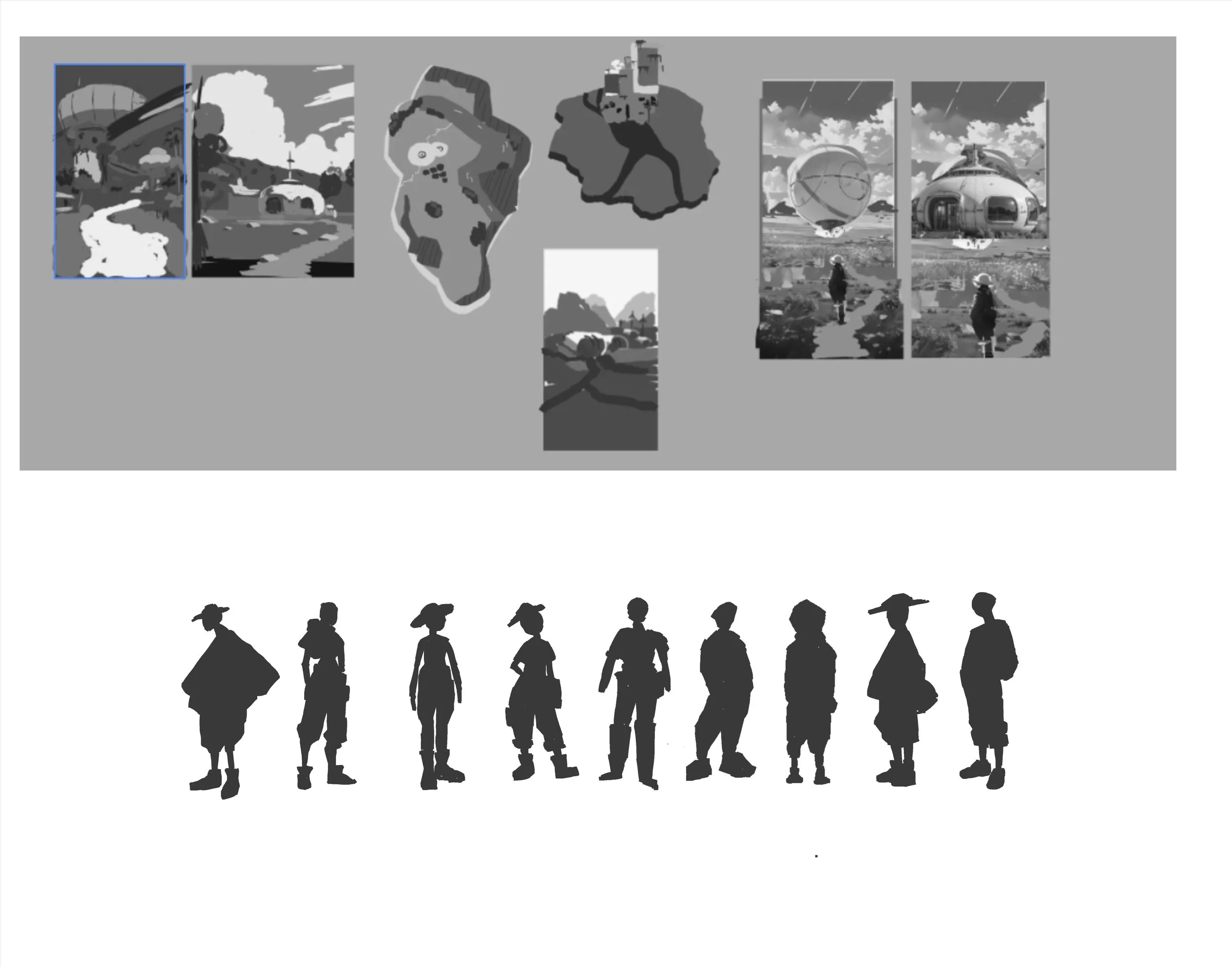
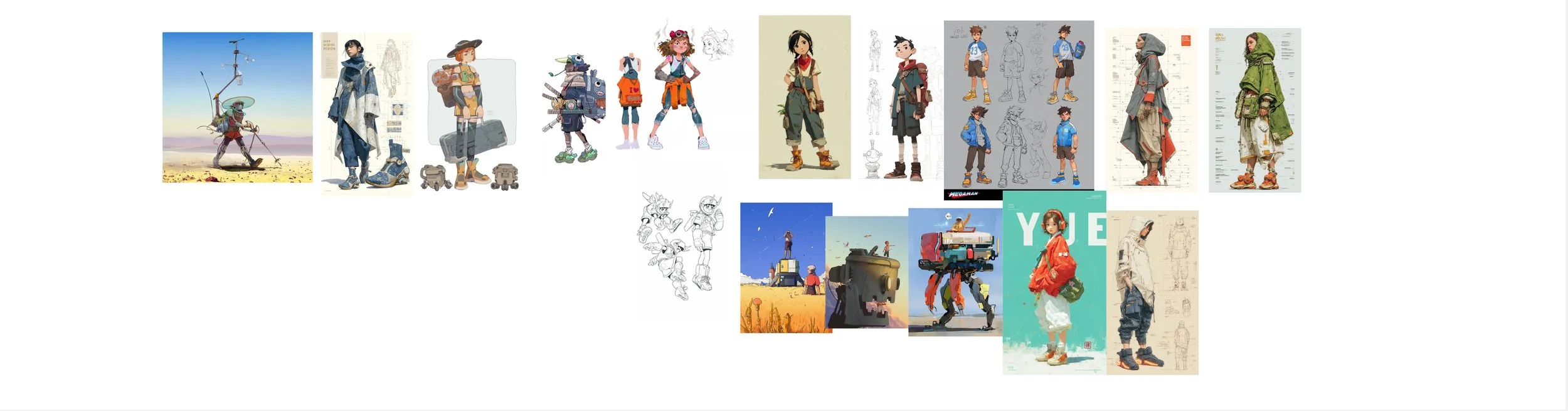
Nine silhouettes. One hero.
Designed silhouette-first. Wide-brim hat, practical clothing, traveler's bag — built to read at any size.
Marked: chosen direction.
Four acts. One quiet pilgrimage.
Arrival
Lonely curiosity · 0–4 hrsYou wake up in the lander. The atmospheric scrubbers still work but everything outside is silent. A small worker drone greets you — half-buried in sand, but functional. The first letter from V arrives, washed up at the edge of your reclaimed zone.
90% rust · 10% greenThe First Returnees
Quiet hope, growing community · 4–15 hrsPeople start arriving. Slowly. Each one comes with a reason. Ode the beekeeper. Marsh the engineer. The first community building is restored. A new region opens — Dust Hollow — fully dead, with a ruin at its center.
70% rust · 30% greenWhat V Left Behind
Reverent melancholy · 15–35 hrsDeeper salvage reveals the truth: V was the last person on Solara before it was abandoned. She built the first mycelium network. She died here. Her notes describe what should grow, where, and why. You're not the savior. You're the second botanist.
50% rust · 50% greenLong Green
Quiet completion. Steward, not savior · 35+ hrsNo boss fight. No ending screen. The game shifts from recovery to stewardship. The mycelium spreads passively now, faster than your interventions. You write your own letter to whoever comes next. The game asks: what would you want them to know?
15% rust · 85% green